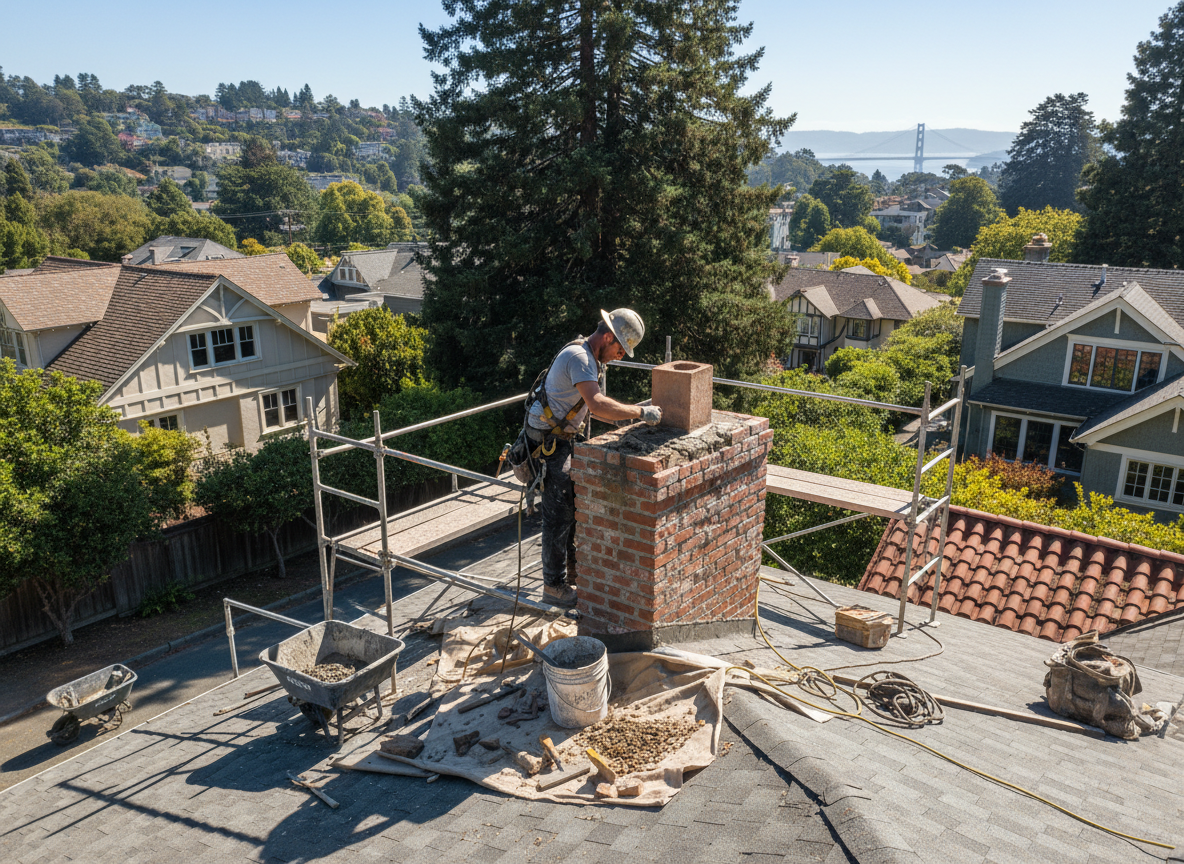
Berkeley Heights homes often feature older brick chimneys tied into asphalt or slate roofs that were installed decades ago. Freeze-thaw cycles common in Union County winters push moisture behind the flashing, loosening crown mortar and allowing water to track into attic spaces. Roof chimney repair here requires removing deteriorated flashing, installing new step flashing that integrates with existing shingles, and rebuilding the crown with a slope that sheds water away from the flue.
When working on two-story colonials along Springfield Avenue or split-levels near the Watchung Reservation, access is frequently limited by steep pitches and mature trees. Technicians must stage ladders on uneven terrain and protect landscaping while cutting out rotted sheathing around the chimney base. Proper underlayment replacement and counter-flashing tucked under the roof membrane prevent recurrence during heavy spring rains typical to the area.
Code compliance in Berkeley Heights calls for maintaining proper clearance from combustible framing and ensuring the cricket on the uphill side of wider chimneys remains intact. Skipping the cricket on a roof with a northern exposure leads to snow accumulation and repeated leaks. Every repair includes inspection of the flue liner condition because cracked tiles allow exhaust gases to reach the roof deck.
Seasonal Guidance
Union County winters accelerate crown deterioration; schedule inspection before the first hard freeze. Spring roof walks after heavy rain often reveal staining that points to failed flashing rather than the roof itself.
Technician insight
In Berkeley Heights the thing that catches most people out with roof chimney repair is the cricket on the uphill side of the chimney. Older split-levels near the reservation often lack one or have a rotted one hidden under snow load, so water keeps coming back every spring no matter how many times the flashing gets replaced.
Cricket Failure on Springfield Avenue Colonial
Homeowner noticed recurring attic stains after winter storms. Inspection revealed a missing cricket behind the chimney on a steep asphalt roof. We rebuilt the cricket, replaced rotted sheathing, and installed new integrated flashing. No further leaks reported through the following spring rains.
How it works
- 1
Initial Assessment
Technician climbs the roof to evaluate flashing, crown, and surrounding shingles for water entry points specific to Berkeley Heights roof pitches.
- 2
Material Removal
Deteriorated flashing and damaged sheathing are cut away while protecting existing roof surfaces common on local colonials.
- 3
Flashing and Crown Work
New step flashing is installed and integrated with shingles; crown is rebuilt with proper slope and sealed against Union County freeze-thaw cycles.
- 4
Final Integration and Test
Counter-flashing is tucked under the roof membrane, cricket is verified, and water test confirms no leaks remain.
Pricing
Upfront written quotes provided after roof inspection; final price depends on roof pitch, chimney width, and extent of sheathing damage.