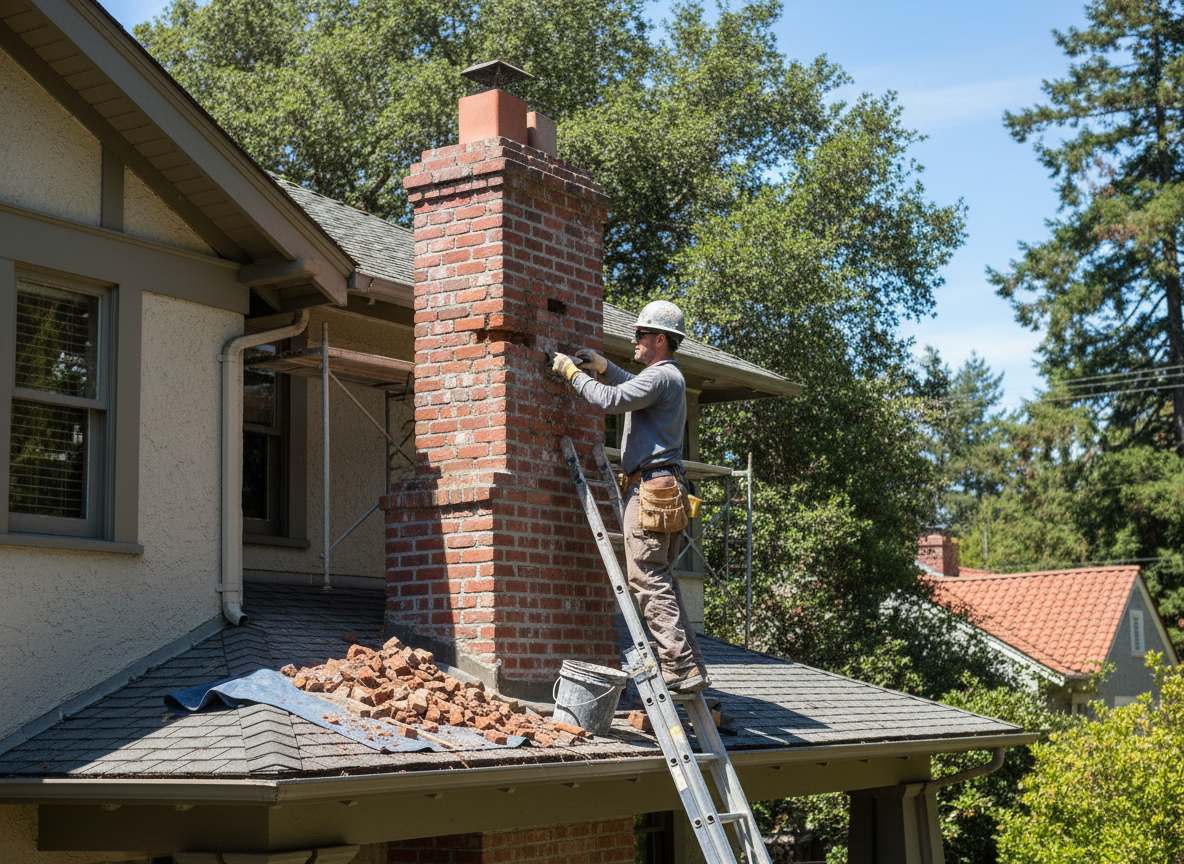
Berkeley Heights homes from the postwar building boom often feature chimneys built with soft common brick and lime mortar that has started to fail after decades of freeze-thaw cycles. Water enters through open joints, freezes, and pushes the bricks outward, creating visible bulges or loose crowns. A masonry repair crew has to rake out the old mortar to the proper depth, clean the joints, and repoint with a compatible Type N mortar that matches the original compressive strength so the chimney can move with the house.
When we reach the flue tile area, we check for spalling caused by acidic creosote and repeated heating. If tiles are cracked, we install stainless steel liners rather than attempting patch repairs that will fail within a season. Crowns on many Berkeley Heights chimneys sit flat and collect snow; we rebuild them with a slight pitch and a proper drip edge so water sheds away from the brick instead of running down the face.
Seasonal Considerations
Winter storms and spring thaw cycles accelerate damage on north-facing chimneys that stay shaded. Homeowners in the Springfield Avenue corridor notice loose bricks after heavy snow loads because the added weight stresses already weakened mortar joints. Scheduling repointing before the first hard freeze prevents water from entering and expanding.
Technician insight
In Berkeley Heights the thing that catches most people out with chimney masonry repair is how the clay soil around many 1960s-1970s homes shifts after heavy rain and torques the chimney base, reopening joints that were pointed only a few years earlier.
Cracked Crown and Loose Joints on Plainfield Avenue
Water had been running behind the flashing on a 1972 brick chimney. We found deteriorated crown mortar and open joints on the north face. The crew removed the old crown, repointed all joints to the roofline, and rebuilt the crown with a sloped wash. The homeowner reported no further staining after the next rain.
How it works
- 1
Site Inspection
We climb the roof and examine every joint from crown to roofline, noting any separation at the flashing or step cracks in the brick.
- 2
Mortar Removal
Old mortar is cut out to a minimum of 3/4 inch depth without damaging the brick edges, then joints are brushed clean of dust.
- 3
Repointing and Rebuild
New mortar is packed in layers and tooled to match existing profiles; damaged bricks are replaced with matching units where needed.
- 4
Crown and Flashing Check
We verify the crown pitch and reseal flashing to the chimney so water cannot re-enter the repaired areas.
Pricing
Upfront quotes after inspection; cost driven by height, number of joints, and whether a liner is needed.