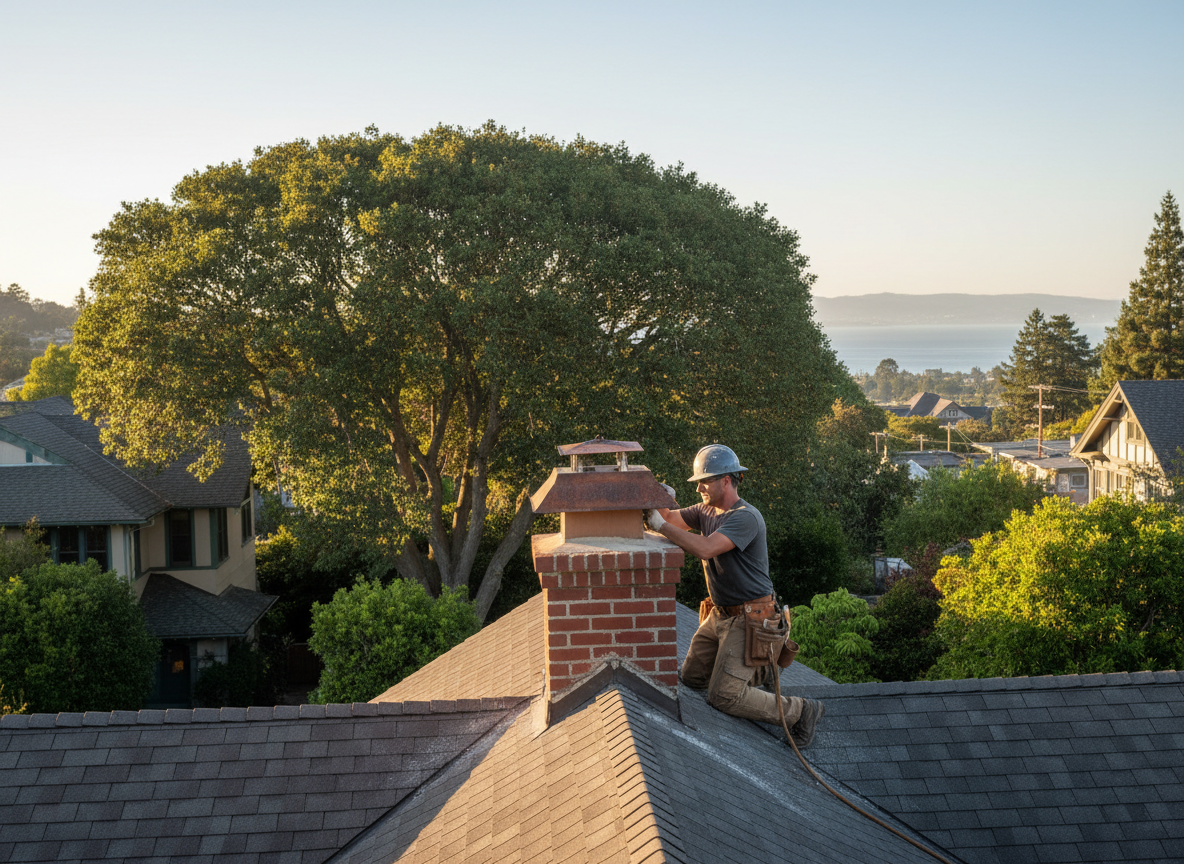
Berkeley Township homes, many built from the 1960s through the 1990s in sections like Bayville and Pinewald, often feature masonry chimneys with metal caps exposed to constant salt-laden air from Barnegat Bay. This accelerates rust on galvanized and even stainless caps, especially where the original flashing meets the crown. Homeowners notice water stains on attic insulation or damper rust long before the cap itself fails visibly. We replace or rebuild caps using marine-grade stainless or copper, sealing the crown with elastomeric coatings formulated for coastal freeze-thaw cycles rather than generic caulk.
Wind-driven rain from nor'easters and hurricane remnants funnels directly down uncapped or poorly capped flues in this flat-to-gently-sloping terrain. A missing or bent cap also allows raccoons and squirrels easy entry into chase-style chimneys common on split-levels along Route 9. During repair we inspect the flue tile alignment and crown integrity because cracked crowns here frequently allow water to pool behind the cap, accelerating spalling in the brick. We never reuse corroded hardware; new stainless lag bolts and proper counter-flashing prevent recurrence within two seasons.
Code compliance in Ocean County requires spark arrestors on all wood-burning appliances. We verify the new cap meets current clearance rules from nearby tree lines and rooflines, especially on ranch homes where low pitches place caps close to cedar shake or asphalt surfaces. Homeowners in Holiday City and Silver Ridge often discover their caps were never fastened correctly after the original install, leading to caps lifting in 40-mph gusts. Our process includes torque-testing every anchor point before leaving the roof.
Technician insight
In Berkeley, the thing that catches most people out with chimney cap repair is the salt air from Barnegat Bay eating through standard galvanized caps in under five years on pre-1985 homes along the bay side of Route 9; the crown usually needs coating at the same time or water keeps migrating behind the new cap.
Lifted Cap After Nor'easter
A Bayville split-level showed water stains after a March storm. We found the original cap had only two rusted screws left and the crown had a hairline crack. We removed the cap, coated the crown, and installed a new stainless unit with full perimeter flashing. No further water entry reported the following winter.
How it works
- 1
Site Assessment
We climb and photograph the existing cap, crown, and flashing from Berkeley rooftops, noting salt corrosion patterns and any chase liner damage.
- 2
Cap Removal and Crown Inspection
Old hardware is cut away; we check for hidden water intrusion into the brick and test flue draft before specifying the replacement.
- 3
New Cap Fabrication and Install
Marine-grade stainless or copper cap is sized on-site, secured with stainless fasteners, and sealed at the crown with coastal-rated coating.
- 4
Final Testing and Cleanup
We confirm spark arrestor function, verify no debris entered the flue, and remove all metal shavings from the roof and gutters.
Pricing
Upfront quotes provided on-site; pricing varies by cap material, roof access, and crown condition.