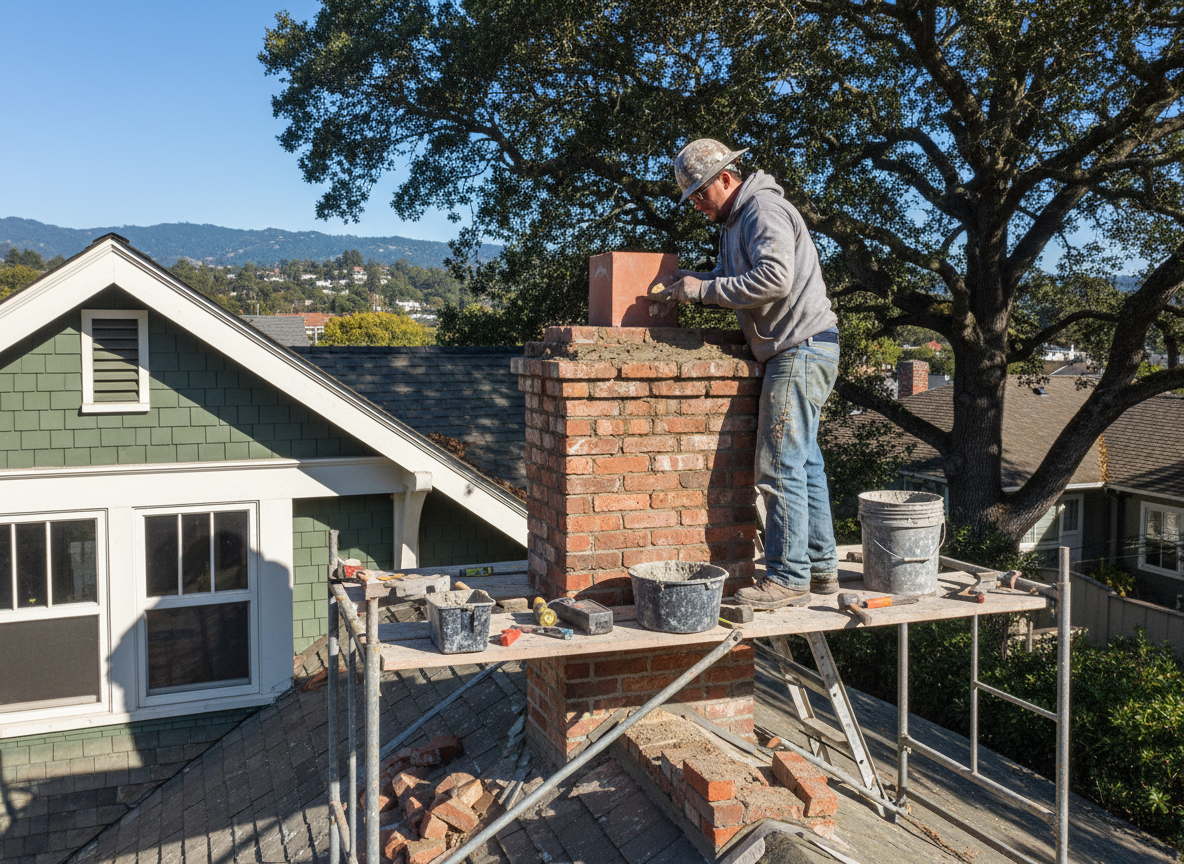
Berkeley and Berkeley Heights homes often feature masonry chimneys built before the 1980s that face repeated freeze-thaw cycles and salt air exposure from the nearby coast. These conditions accelerate mortar joint failure and crown cracking, allowing water to enter the flue liner and damage interior walls. Homeowners in neighborhoods around Springfield Avenue frequently notice white efflorescence or draft problems after heavy winter storms.
Repair work here starts with a full flue inspection using cameras to check for creosote buildup and liner gaps before addressing the masonry. We repoint joints with lime-based mortar matched to the original brick to avoid trapping moisture, and we install new chimney caps when existing ones have rusted through from ocean-influenced humidity. Code requirements in Ocean and Union counties call for proper flashing integration at the roofline to prevent leaks during nor'easters.
Edge cases include chimneys on split-level homes where the chase runs through finished living space, requiring careful dust containment during crown reconstruction. Soil settlement along the coastal plain can tilt bases slightly, so we check plumb before sealing. Upfront quotes follow the on-site assessment, and 24/7 scheduling at 404 Springfield Ave supports emergency calls when storms expose new cracks.
Technician insight
In Berkeley the thing that catches most people out with residential chimney repair is how quickly salt air from the coast eats through the mortar on pre-1970 brick stacks once the crown starts letting water in. Homeowners often miss the early efflorescence on the interior chase until it shows in the living room during a nor'easter.
Cracked Crown After Winter Storm
A Berkeley Heights homeowner called after noticing water stains near the fireplace following a January freeze. We found the crown had separated along one edge and water had reached the flue liner. We rebuilt the crown, repointed the upper courses, and added a new cap. The draft returned to normal and no further interior damage appeared.
How it works
- 1
Initial Assessment
We arrive at the Berkeley property and inspect the chimney exterior, crown, and flashing for visible damage from weather exposure.
- 2
Flue Camera Scan
A camera run checks the liner condition and identifies creosote or water intrusion points common after coastal storms.
- 3
Masonry Repair
We repoint joints, rebuild damaged crowns, and install proper caps using materials suited to local freeze-thaw cycles.
- 4
Final Testing
Smoke and draft tests confirm proper function before we complete the job and review findings with the homeowner.
Pricing
Upfront quotes after inspection reflect the specific condition of each chimney rather than flat rates.