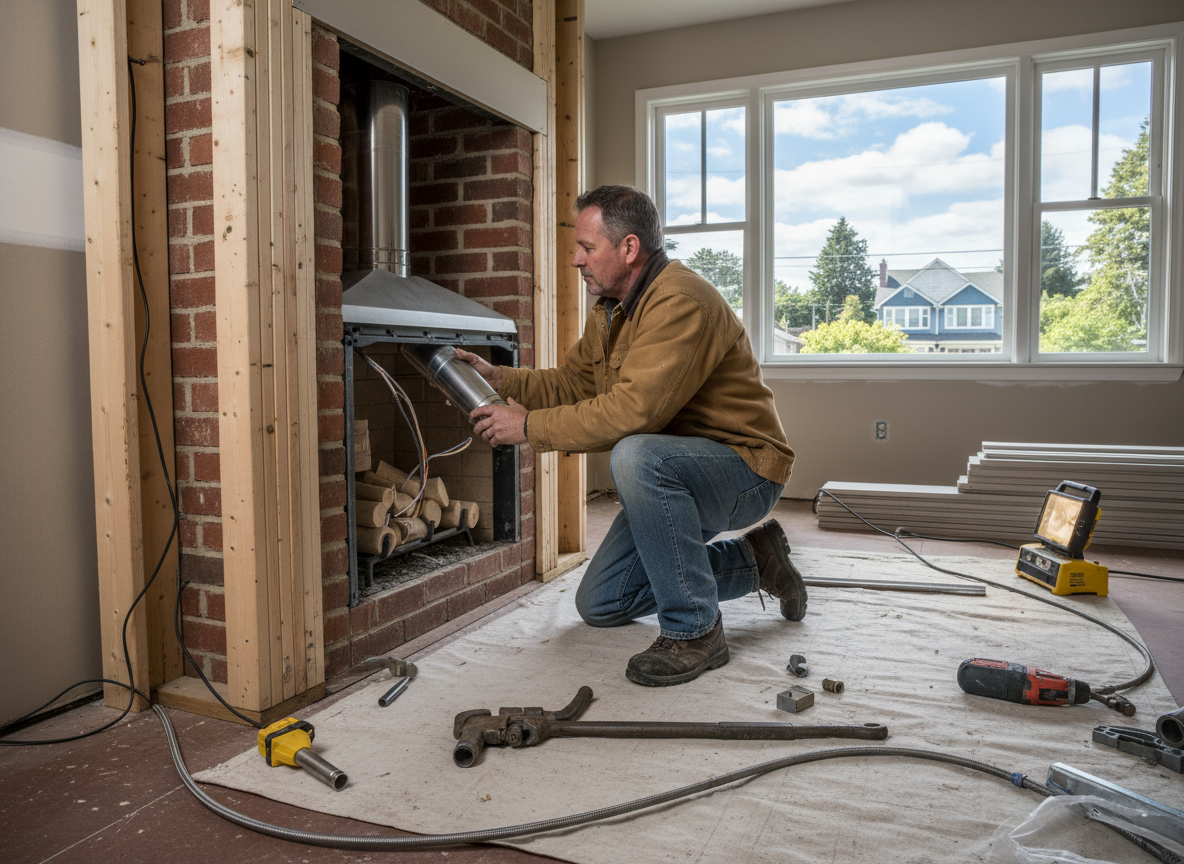
Berkeley Township and nearby Berkeley Heights neighborhoods feature many mid-century homes with masonry chimneys that settled on sandy Ocean County soil. Installing a new fireplace requires checking the existing flue for cracks and proper liner condition before any insert or direct-vent unit goes in. Winter nor'easters drive moisture into those older flues, so we always verify draft and flashing details at the roofline to prevent future water intrusion into the living space.
Gas and wood-burning options each bring different venting needs in this region. Direct-vent fireplaces reduce chimney dependency but still require precise termination placement to clear nearby rooflines common on ranch-style homes here. We inspect for proper clearances around combustible framing, a frequent issue in homes built before current IRC updates, and confirm the chimney crown and cap remain intact after the new unit is connected.
Homeowners often overlook how the coastal humidity and freeze-thaw cycles affect chimney exteriors during installation. We route combustion air intakes away from prevailing wind directions and ensure the hearth extension meets local setback rules on concrete slabs that can shift slightly. Every job starts with a full chimney sweep and camera inspection to document existing conditions before any new fireplace components are placed.
Technician insight
In Berkeley, the thing that catches most people out with fireplace installation is the condition of 1960s-1970s chimneys built on sandy soil near the bay. Those flues often have hairline cracks from settling that only show up on camera, and adding a new unit without relining first creates draft problems once the winter winds pick up.
Ranch home chimney tie-in
The homeowner wanted a direct-vent gas fireplace in a 1972 Berkeley ranch. We found the original flue had settled unevenly and showed moisture staining. We installed a stainless liner, tied the new unit into the existing chimney, and added proper flashing at the roof penetration. The fireplace now drafts cleanly even during heavy coastal rain.
How it works
- 1
Initial Site Assessment
We arrive at the Berkeley property and inspect the existing chimney structure, flue condition, and surrounding framing for code compliance.
- 2
Unit Selection and Vent Planning
We review gas or wood options that match the home's layout and confirm termination points clear local roof and window requirements.
- 3
Installation and Tie-In
The new fireplace is set, vented into the chimney or direct-vent system, and connected while protecting surrounding finishes.
- 4
Final Testing and Cleanup
We run the unit, verify draft and safety switches, then clean the work area and review operation with the homeowner.
Pricing
Pricing is quoted after an on-site chimney inspection because flue condition and access vary widely across Berkeley homes.