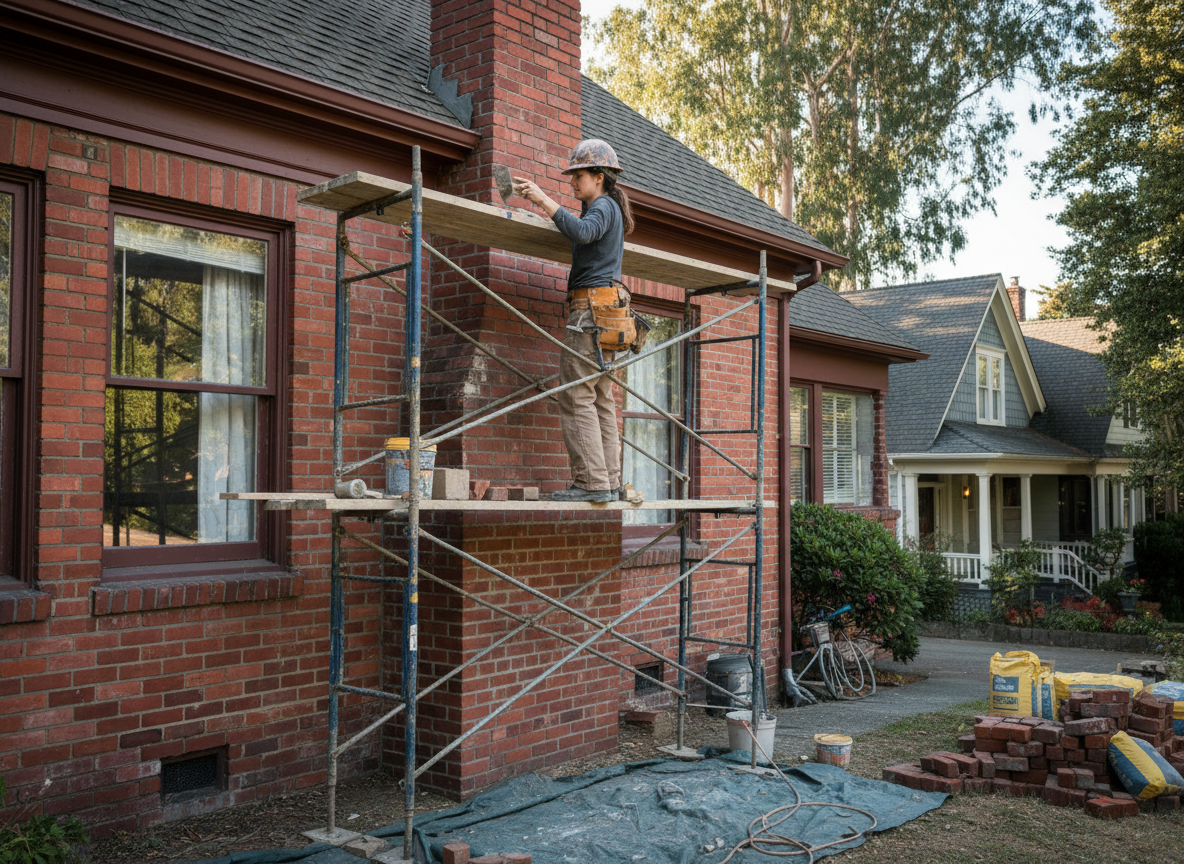
Berkeley Township homes built before 1980 often feature masonry chimneys that suffer from repeated freeze-thaw cycles during Ocean County winters. Moisture enters through cracked mortar or damaged crowns, then expands when temperatures drop below freezing, widening gaps and allowing water to reach interior framing. Restoration begins with a full inspection of flue tiles, crown, and flashing before any tuck-pointing or rebuild work.
Coastal humidity near Barnegat Bay accelerates spalling on exterior brick faces, especially on south and east exposures. We remove loose material, install new stainless steel flue liners where code requires, and repoint with Type N mortar formulated for the region's temperature swings. Homeowners in Berkeley Heights and Pinewald frequently see water stains on ceilings after heavy nor'easters because original flashing was never updated when roofs were replaced.
Common Restoration Triggers
Older chimneys in the Berkeley area often need work after roof replacements or when selling a home, since inspectors flag missing rain caps and deteriorated crowns. We match existing brick where possible rather than using modern alternatives that stand out on 1960s and 1970s split-levels common along Route 9.
Materials and Edge Cases
When rebuilding a crown we use pre-cast concrete or cast-in-place methods rated for salt air exposure. Flashing must extend under the roof membrane at least six inches on homes with asphalt shingles typical throughout the township. Skipping this step leads to leaks that travel down the chimney chase and damage second-floor ceilings.
Technician insight
In Berkeley the thing that catches most people out with chimney restoration is how fast water gets behind the brick on south-facing walls once the crown cracks; the freeze-thaw cycles here turn a small leak into full spalling within two winters on the older capes along Route 9.
Leaking Chimney on Pinewald Cape
Water stains appeared on the second-floor ceiling after a March nor'easter. Inspection showed a cracked crown and deteriorated flashing on a 1972 brick chimney. We rebuilt the crown, installed a new stainless liner, and integrated step flashing under the existing shingles. No further leaks occurred through the following winter.
How it works
- 1
Initial Inspection
We examine the crown, flue, flashing, and brick from roof level and interior cleanout, noting any water intrusion paths common after nor'easters.
- 2
Damage Assessment
Photos and notes document spalling, missing mortar, or liner cracks before preparing a scope that accounts for the home's age and roof pitch.
- 3
Repair Execution
Tuck-pointing, crown rebuild, or liner installation proceeds with materials suited to Ocean County freeze-thaw conditions and coastal humidity.
- 4
Final Verification
We test draft, confirm no active leaks, and walk the homeowner through the completed work at 404 Springfield Ave.
Pricing
Pricing varies by chimney height, extent of brick damage, and whether a liner is required; we provide an upfront quote after inspection.