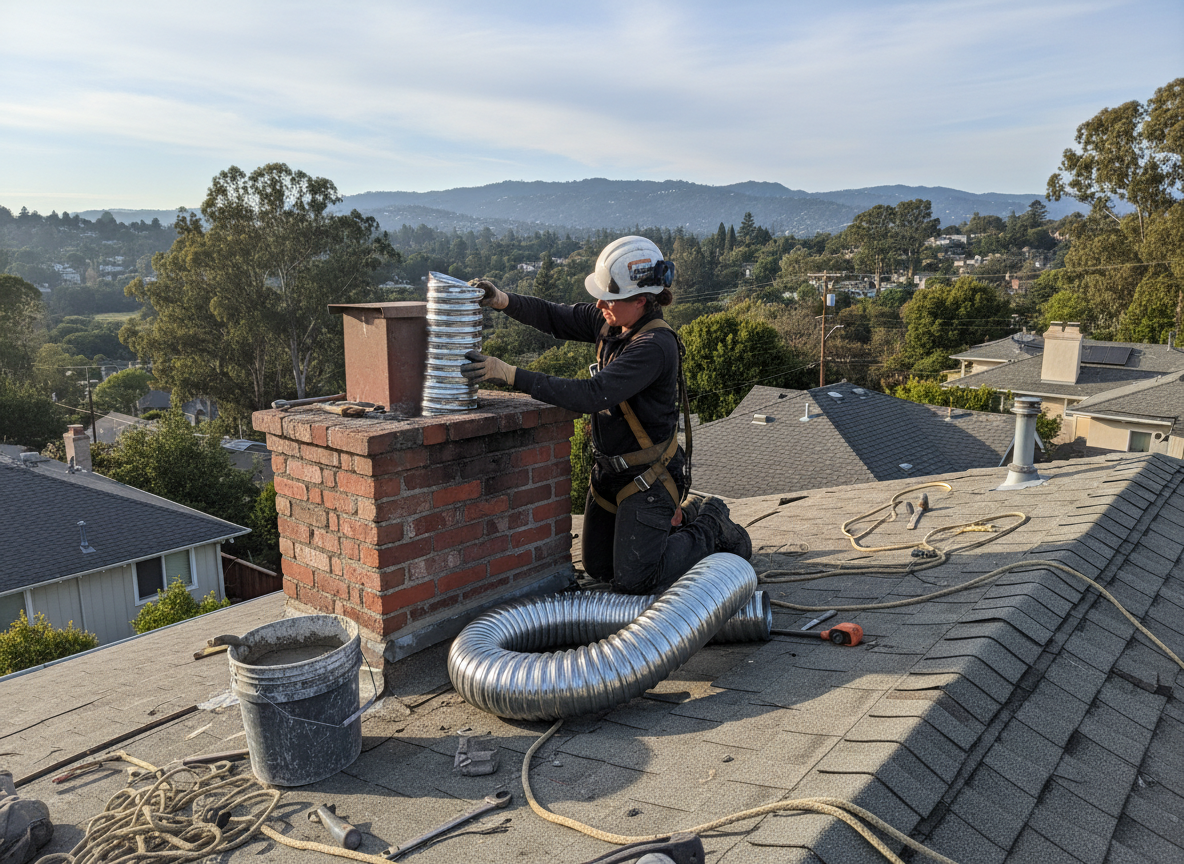
Chimney liner repair addresses cracks, corrosion, and gaps that allow smoke and creosote to leak into walls. In Berkeley Heights homes built mid-century, clay tiles often fracture from repeated freeze-thaw cycles, while stainless steel inserts can pit from acidic flue gases. Proper repair requires removing debris, matching the new liner to the flue size, and sealing connections so exhaust stays contained.
Edge cases appear when the original flue has offset angles or when water has pooled at the base. Technicians must inspect the smoke chamber and crown condition before installing a new liner, because a leaking crown will destroy fresh work within a season. Local code in Union County requires liners to meet UL 1777 standards for gas appliances, and any repair that changes the flue diameter needs a permit pull.
Homeowners sometimes confuse liner failure with draft issues caused by oversized flues. A camera inspection reveals whether the liner itself is compromised or if the problem sits higher at the cap or lower at the cleanout door. Skipping this step leads to repeated service calls when the real issue is water intrusion from the roof flashing around the chimney.
Seasonal Considerations
Winter storms in the Berkeley area drive more emergency calls once temperatures drop below freezing. Ice expansion inside an already cracked liner accelerates damage, so scheduling inspection before the first hard freeze prevents mid-winter outages.
Technician insight
In Berkeley, the thing that catches most people out with chimney liner repair is water that sits in the cleanout because the grade around older Berkeley Heights foundations slopes back toward the house. That moisture keeps the lower liner wet all winter and turns a small crack into a full replacement faster than homeowners expect.
Cracked Clay Liner in Berkeley Heights Split-Level
Homeowner noticed faint smoke odor on the second floor during cold snaps. Camera showed fractured clay tiles at the offset and standing water at the base. We removed the broken sections, installed a continuous stainless liner, and sealed the cleanout. Draft tested clear and the odor disappeared.
How it works
- 1
Initial Camera Inspection
A technician runs a camera through the flue to map cracks, offsets, and creosote buildup while noting the existing liner material.
- 2
Debris Removal and Preparation
Loose tile fragments and creosote are cleared, and the flue is measured for the correct replacement liner diameter and length.
- 3
Liner Installation
The new stainless or cast-in-place liner is positioned, sealed at joints, and connected to the appliance collar with proper clearances maintained.
- 4
Final Testing and Documentation
A smoke test confirms draft integrity, and a written report with photos is provided for the homeowner's records.
Pricing
Upfront quotes provided after inspection; final price depends on flue height, liner material, and access.