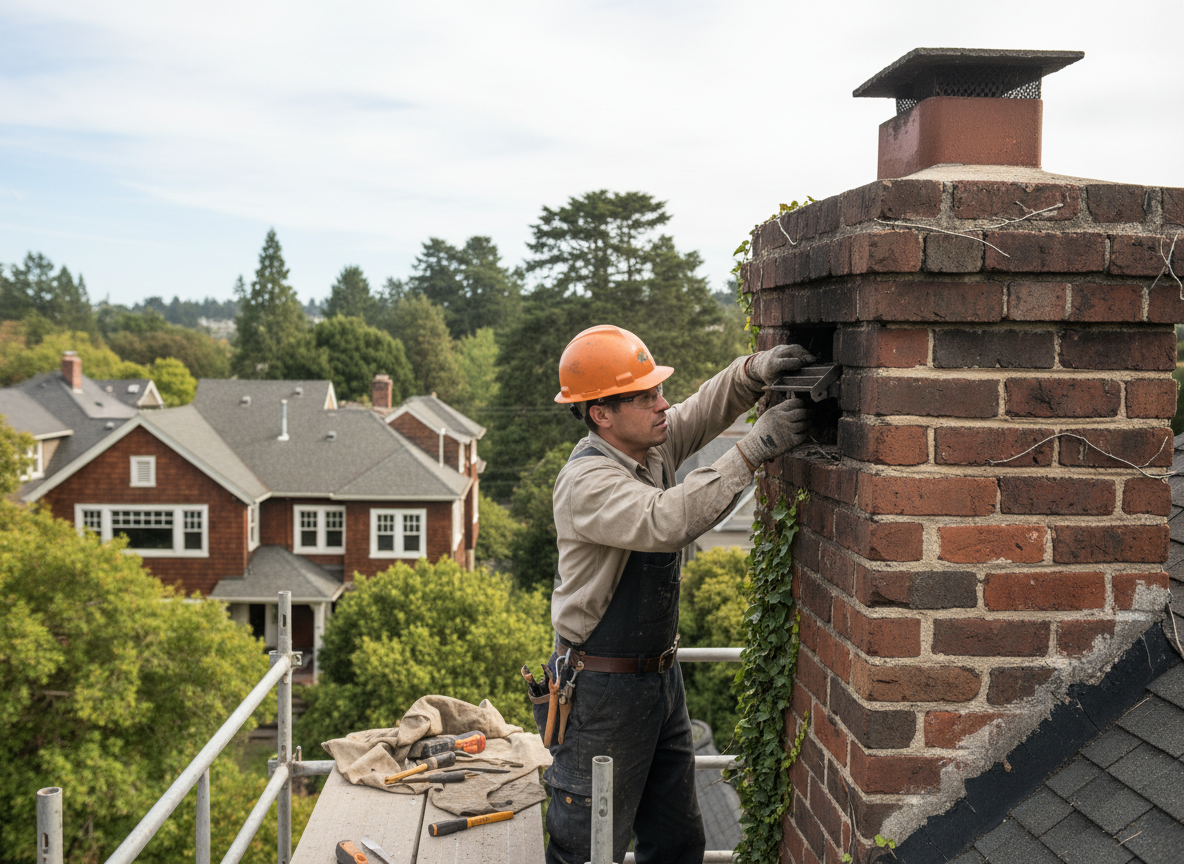
Chimney dampers in Berkeley Heights homes from the 1950s and 1960s often seize from decades of creosote and seasonal humidity that promotes rust on cast-iron or steel plates. Homeowners notice drafts in winter or smoke spillage during shoulder seasons when the mechanism fails to seal or open fully. Access is frequently limited by narrow flues or tight attic spaces common in split-levels along Springfield Avenue, requiring drop cloths and vacuum extraction to avoid soot migration into living areas.
Repair begins with a visual and manual check of the damper plate, pivot rod and handle linkage while the flue is cold. Corrosion at the pivot points or warped plates from repeated freeze-thaw cycles in Union County winters are the most frequent findings. Replacement uses stainless or heavy-gauge replacements sized to the exact flue dimensions rather than universal kits that leak at the edges. Every job ends with a smoke test to confirm the new damper closes tightly without binding.
Code considerations in Berkeley Heights require that any damper work maintain proper clearance to combustible framing and that the flue remains unobstructed after repair. Homeowners should avoid forcing a stuck handle, which can crack the flue tile or damage the crown. Annual inspection before heating season prevents most emergency calls that occur when cold weather arrives and the damper refuses to close.
Technician insight
In Berkeley Heights the thing that catches most people out with chimney damper repair is the mid-century split-levels where the damper rod runs through a tight chase that collects moisture from the roof valley above, rusting the pivot before homeowners ever notice a draft.
Seized Damper on Springfield Avenue Home
Homeowner could not close the damper and noticed cold air entering the living room. Inspection revealed heavy rust on the pivot rod caused by roof runoff tracking down the chase. The old cast-iron unit was removed and replaced with a stainless damper sized to the flue; a smoke test confirmed a tight seal with no binding.
How it works
- 1
Initial Inspection
Technician examines the damper plate, rod and linkage from both the firebox and roof level to identify binding, corrosion or missing components.
- 2
Diagnosis and Quote
Findings are explained on site with an upfront price for repair or replacement before any work begins.
- 3
Repair or Replacement
Seized parts are freed or the entire damper assembly is swapped using a properly sized unit matched to the flue.
- 4
Testing and Cleanup
Smoke test confirms seal and operation; soot and debris are removed from the firebox and surrounding area.
Pricing
Upfront quotes provided after inspection; final cost depends on access difficulty and whether the existing damper can be repaired or must be replaced.