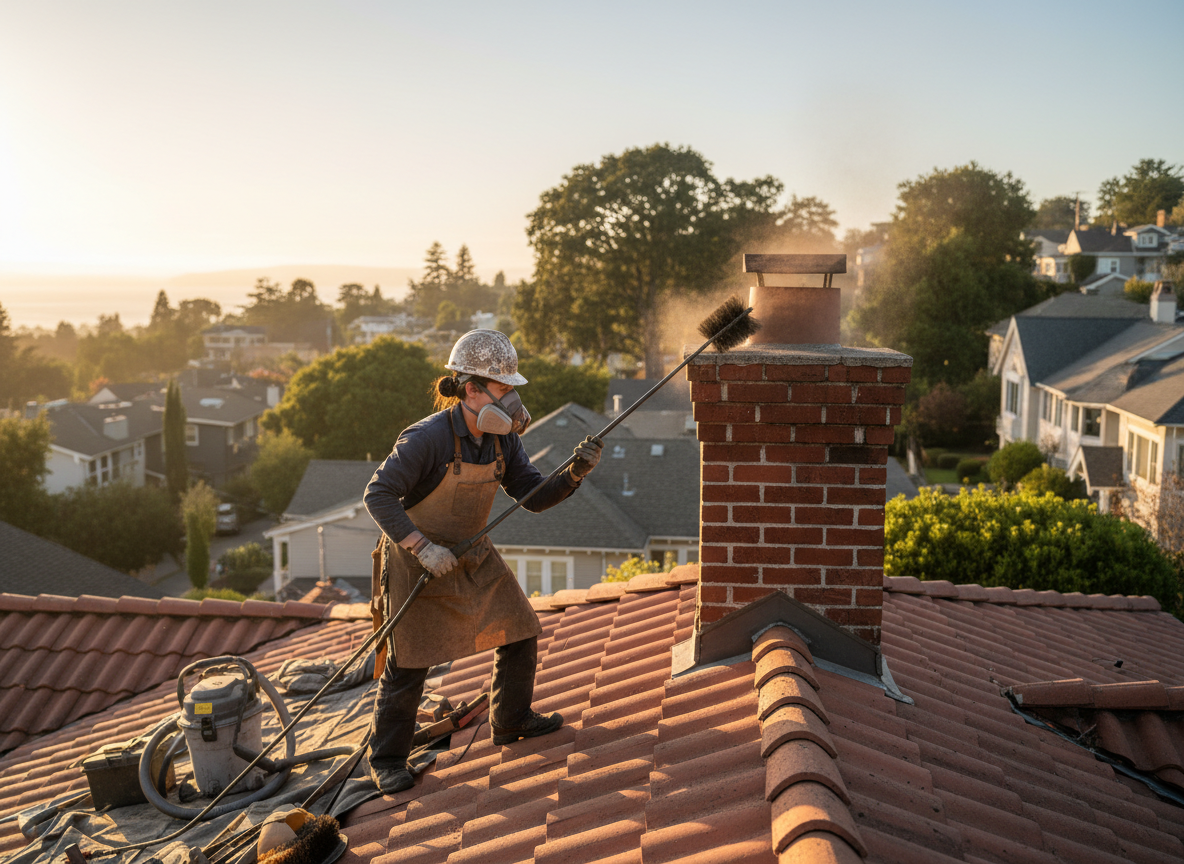
Berkeley Township homes, many built between the 1950s and 1970s with masonry chimneys serving wood stoves or fireplaces, accumulate creosote rapidly during the damp winters when residents burn seasoned oak or pine. Salt air drifting inland from Barnegat Bay accelerates corrosion on flue liners and caps, so a standard brush sweep often reveals pitted metal that needs closer inspection before the next heating season.
Moisture trapped in unlined or poorly flashed chimneys common to split-levels along Route 9 and the surrounding pine barrens can cause water to mix with soot, forming acidic deposits that eat through mortar joints. Technicians must check for these hidden issues during every cleaning because a single missed crack allows carbon monoxide to migrate into living spaces during the next cold snap.
Cleaning begins with a top-down or bottom-up approach depending on roof pitch and access, followed by vacuum removal of debris that would otherwise fall into the firebox. In Berkeley, crews also examine the chimney crown and flashing where wind-driven rain frequently undermines the seal, preventing future water intrusion that homeowners often mistake for a roof leak.
Seasonal Considerations
Before winter sets in, Berkeley residents should schedule cleaning after the last heavy rain but before temperatures drop below freezing. This timing prevents ice from forming inside a dirty flue and reduces the chance of a chimney fire when the first cold front arrives from the northwest.
Technician insight
In Berkeley, the thing that catches most people out with chimney cleaning service is how quickly salt air from the bay rusts stainless liners on capes built near the bayfront; homeowners assume the flue is fine until we pull the cap and find pinholes that let water straight into the smoke chamber.
Hidden Liner Damage on a 1968 Cape
Homeowner in Bayville reported slow draft after burning wood through January. We found heavy creosote masking rusted sections of the liner caused by years of salt-laden moisture. After cleaning we sealed the crown and recommended a stainless insert to stop ongoing corrosion. Draft improved immediately and the homeowner avoided a potential carbon monoxide issue during the next freeze.
How it works
- 1
Initial Assessment
Technician evaluates chimney exterior and interior access points from the ground and roof.
- 2
Creosote Removal
Rotary brushes and vacuum system clear Stage 1 through Stage 3 deposits without damaging liners.
- 3
Debris Extraction
All loosened material is removed from the firebox and smoke chamber to prevent re-ignition risks.
- 4
Final Inspection
Camera check confirms clean flue walls and identifies any liner or crown concerns for the homeowner.
Pricing
Cost depends on chimney height, number of flues, and extent of creosote buildup; upfront quotes provided before work begins.