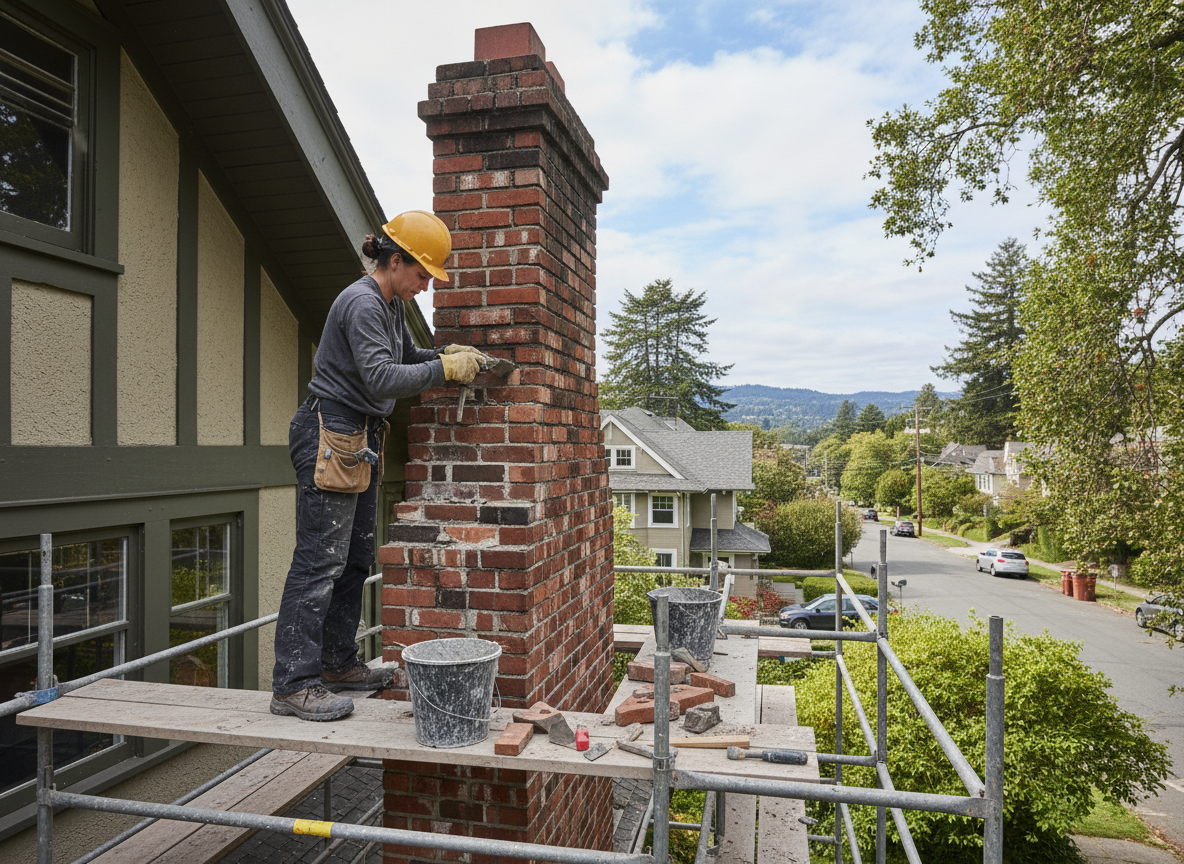
Berkeley Heights homes built before 1970 commonly feature solid brick chimneys that suffer from repeated freeze-thaw cycles. Winter temperatures drop below freezing while daytime thaws allow water to penetrate hairline cracks, then expand overnight and spall the face brick. Matching the original soft brick and using type-N lime mortar rather than modern Portland mixes prevents further cracking along the same joints.
Water infiltration often starts at the crown or flashing where the chimney meets the roof. In this area, many roofs were re-shingled without proper step flashing integration, allowing runoff to reach the brick core. We remove loose material, install new copper flashing tied into existing slate or asphalt, and repoint from the top down so the repair reads as one continuous surface rather than a visible patch.
Structural movement from the local clay-heavy soil also shifts chimney bases. When the foundation settles unevenly, the flue liner can crack and allow carbon monoxide migration into living spaces. A full repair includes checking the liner condition with a camera, rebuilding the base if needed, and verifying clearances to combustible framing per current NJ code before closing the job.
Technician insight
In Berkeley Heights, the thing that catches most people out with brick chimney repair is how the heavy clay soil and winter rains cause the base to settle first, cracking the flue liner long before the upper brick shows damage.
Settled Base on Springfield Avenue Home
Problem: Owner saw daylight through mortar joints after a heavy snow melt. We found the clay soil had shifted the footing, cracking the liner and allowing water into the attic. We rebuilt the lower four courses, installed a new stainless liner, and re-flashed the roof intersection. The chimney now sheds water cleanly and passes a smoke test.
How it works
- 1
Site Assessment
We examine the chimney from crown to foundation, noting spalled brick, open mortar joints, and flashing condition.
- 2
Material Matching
Original brick color, texture, and mortar composition are matched on site to maintain the look and performance of the existing stack.
- 3
Repair Execution
Damaged sections are cut out, new flashing and crown work installed, and repointing completed in lifts to control shrinkage.
- 4
Final Inspection
The chimney is checked for water shedding, liner integrity, and clearance compliance before the crew leaves.
Pricing
Cost depends on height, extent of brick replacement, and whether liner work is required; we provide an upfront written scope after inspection.